
NameSmith
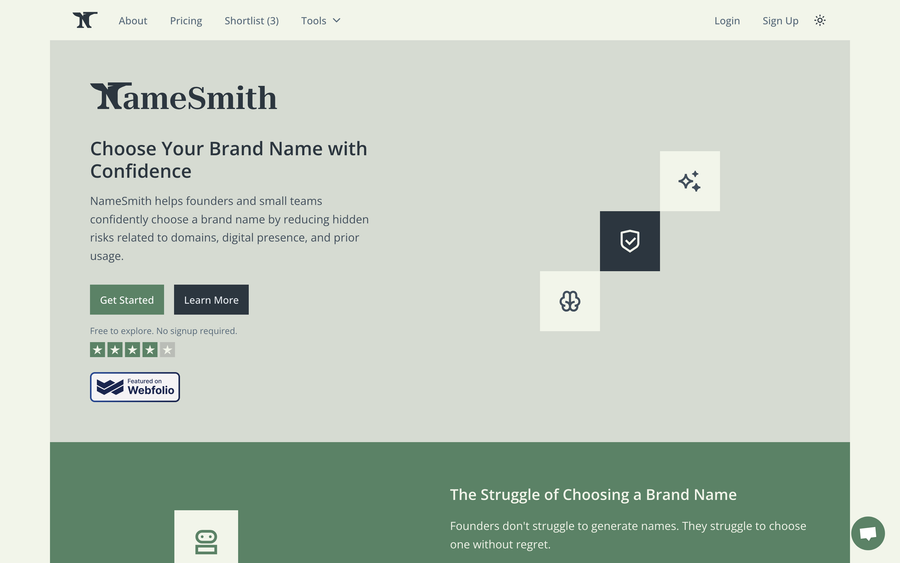
AI-powered naming decision engine for SaaS products — generate names, check domain availability, and get confidence reports.
Role
Full-stack development of the naming platform: AI generation pipeline, domain intelligence engine, and confidence scoring system.
Architecture
NuxtJS, NodeJS, AI — name generation pipeline with domain checks, social handle verification, and evidence-backed MCDA scoring.
Results
Production SaaS helping founders choose brand names with data-driven confidence reports and risk assessment.
Context
NameSmith is a naming decision engine that helps founders and small teams confidently choose a brand name. Unlike simple name generators, NameSmith focuses on the evaluation phase — reducing hidden risks related to domain history, digital presence, and prior usage.
The core problem is not generating names (founders can do that easily) but choosing one without regret. Names that look good often fail due to domain conflicts, social handle inconsistencies, or prior usage.
Goals and Constraints
- Generate creative, brandable name ideas from a short project description
- Check domain availability and historical usage to surface hidden risks
- Verify social handle availability across major platforms
- Provide a clear confidence verdict: Recommended, Proceed with Caution, or Avoid
- Support side-by-side comparison of multiple name candidates
- Keep the exploration phase free with no signup required
Solution and Architecture
The name generation pipeline uses AI to produce creative, relevant name ideas based on the project description and target audience. Each name is then evaluated through multiple signal layers.
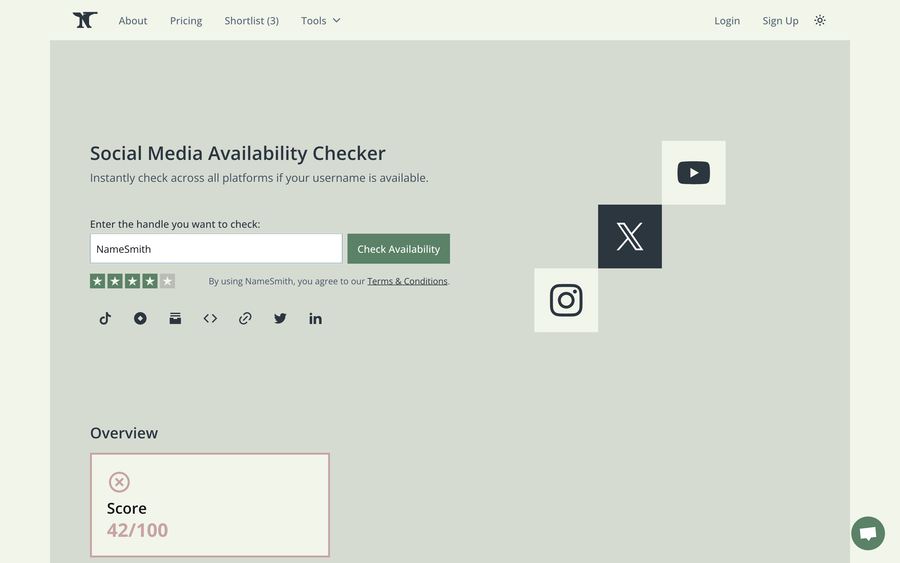
The domain intelligence engine checks not just availability but historical usage, past content, and potential conflicts. Social handle verification scans Twitter, Instagram, and other platforms.
The confidence scoring system synthesizes all signals into a clear verdict using MCDA (Multi-Criteria Decision Analysis) with pairwise comparison.
Technical Decisions
- MCDA scoring over single scores: multi-criteria evaluation provides nuanced risk assessment instead of a misleading single number
- Domain history analysis: checking historical usage and past content to surface hidden conflicts
- Pairwise comparison (Elo-based): candidates are compared head-to-head across dimensions like demand, feasibility, and brandability
- Evidence confidence layer: shows how much support exists behind each recommendation — high scores with weak evidence are flagged
- Free exploration, paid confidence: the exploration phase is free to reduce friction; detailed reports require payment
Other projects
to.it
Drag-and-drop builder to create professional websites without writing code.
Webfolio
Curated discovery platform for web product builders with 16K+ tools, categories, and launch intelligence.
Coralie
Domain opportunity intelligence platform — score, rank, and route domain portfolios with AI-backed evidence.